
BAPAM PERFORMING Arts Medicine
Saline Nebulisation and Steam Inhalation
Research has shown that topical hydration to the vocal folds offers certain benefits such as thinning sticky mucus, reducing sensations of dryness or irritation and lowering the effort needed for vocal fold vibration. A vocal health practitioner may recommend saline nebulisation to provide topical hydration, and this factsheet provides practical information and guidance. In addition, as steam inhalation is popular with vocalists, we have also outlined some safety features and advice for steaming.
Why use Saline Nebulisation?
The sensation of dryness or stickiness in the larynx and vocal tract can result in:
- Changes to voice quality.
- Throat clearing behaviour.
- The feeling of an increased effort level needed to produce sound.
Increased effort levels for voice production are more likely to cause early vocal fatigue along with vocal tract discomfort sensation. Increasing surface hydration in the vocal tract and larynx can be a quick and helpful strategy directly targeting these issues.
A hand-held nebuliser delivers a cool mist of fine saline particles, small enough to reach the lungs. A 0.9% saline solution purchased in small vials or a larger bottle should be used. Inhalation of isotonic saline has a thinning effect on sticky mucus in the larynx and vocal tract. It is helpful to reduce the need to clear your throat. You can use a nebuliser at any time with no vocal rest time required after use.
Benefits of Saline Nebulisation
- Portable and practical.
- Provides a light saline, isotonic mist that has a hydrating effect on the vocal tract.
- No vocal rest time required after using.
- Helpful in dry, air conditioned or dusty environments.
Note: You should speak to your GP before starting nebulising if you have an underlying health or lung condition. You should stop nebulising if you develop any symptoms, such as, cough or breathlessness.
Important: The device, mouthpiece and mask should be cleaned and dried daily or between each use and sterilised weekly to prevent a film build up and avoid risk of inhalation of contaminated particles and potential infection in the lungs.
Saline Nebuliser Instructions
- Ensure that you have charged the nebuliser. Select the mouthpiece or adult mask, depending on your personal preference and attach to the device.
- Open the lid at the top of the device and add 5ml of 0.9% saline solution.
- Close the lid and press the button to start the nebuliser.
- Inhale the gentle mist through your mouth for 10-20 minutes.
- You can use the nebuliser 1-2 times a day or more frequently during times of high vocal demand, when working in air-conditioned environments, in arid climates or low winter temperatures/low humidity.
Steam Inhalation
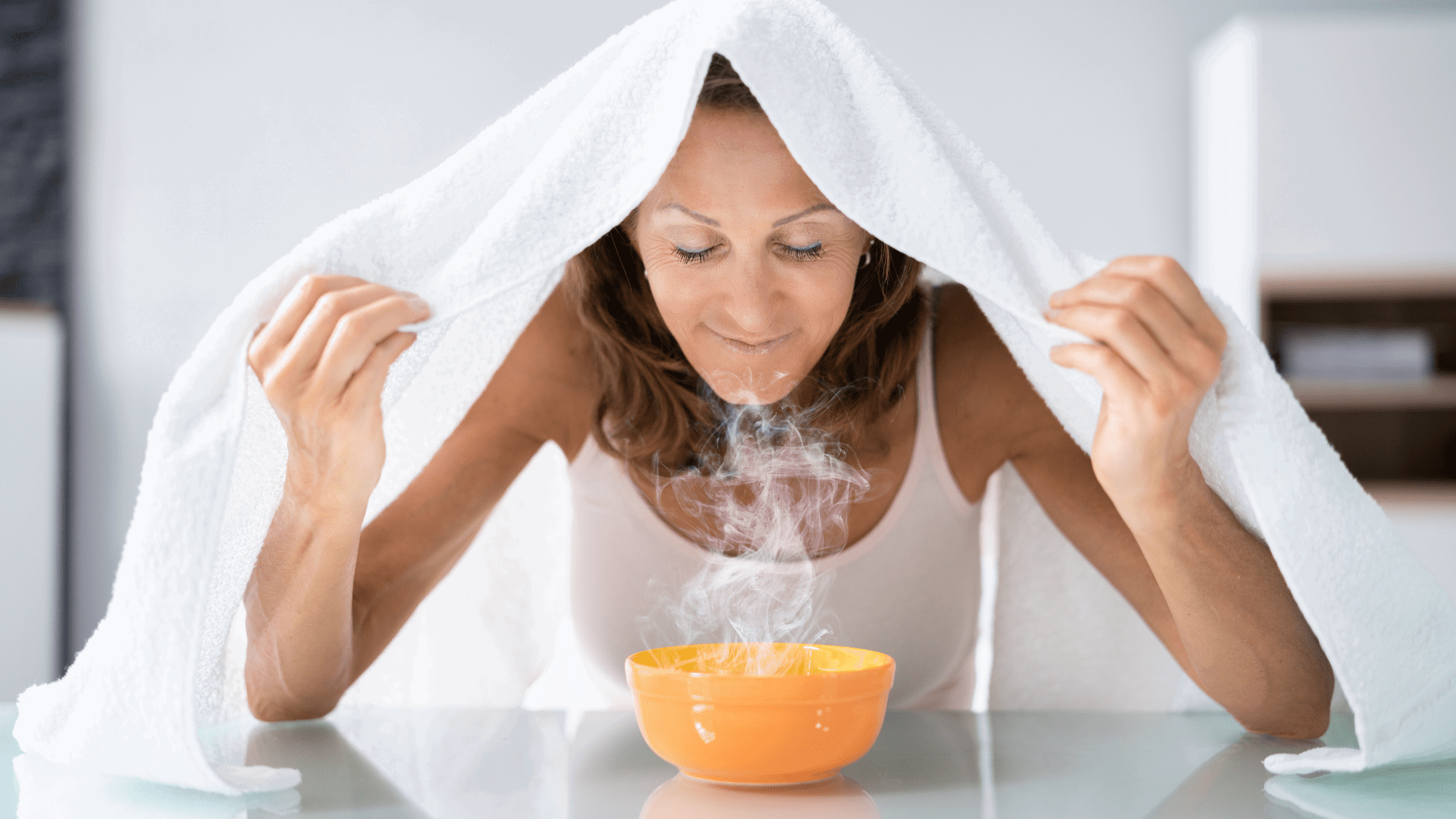
Breathing in warm steam will increase moisture through the vocal tract and larynx. This has the effect of thinning mucus and improving comfort. The gentle warmth is helpful in relaxing tense muscles and can have a soothing effect on the vocal tract. Steaming may be preferred in the evening before bed.
Steam Inhalation Instructions
- Boil water in a kettle or pan and carefully pour into a large, heatproof bowl placed on a stable surface (never place on your lap).
- Do not add any oils to the water as this can be irritating to the lining of the nose and throat.
- Leave the water to cool down for about 10 minutes to avoid breathing in steam that could scald the delicate tissues in your throat and larynx (an effective temperature is between 38-44oC).
- Lean over the bowl with your face about 20-30cm away from the water.
- Loosely drape your head with a towel to trap the steam.
- Breathe in and out through your mouth gently and steadily, avoiding sudden gasps or inhalations. You can breathe in and out through your nose if you prefer as this can also aid nasal congestion.
- Use steam inhalation for 5-10 minutes only.
Warning: You should not use steam inhalation if you have certain health conditions, without consulting your GP first – these include:
- Respiratory conditions such as asthma or COPD as the steam may trigger symptoms.
- Heart conditions such as heart failure or high/low blood pressure as the heat from the steam can expand blood vessels and lead to an increase in heart rate.
- Neurological conditions such as epilepsy or seizures as it may trigger symptoms.
Important safety information:
- Avoid direct contact with boiling water and never inhale steam directly from boiling water or a kettle spout.
- If the steam feels too hot or uncomfortable, allow it to cool for a further period. Inhaling steam that is too hot can cause thermal damage to the delicate tissues of the respiratory tract, potentially leading to swelling and inflammation.
- We advise a period of 20-30 minutes of voice rest after steaming to avoid any adverse effects as an increase in blood flow combined with intensive voice use may increase the risks of vocal fold haemorrhage or bruising.
- If you feel unwell, overheated, dizzy or the steam irritates the vocal tract, stop steaming immediately.
- Take care not to tip the bowl of hot water as this can cause severe burn injuries.
- If you are using a ceramic inhaler (e.g., Dr Nelson’s), ensure that you allow the water to cool before pouring into the pot. The body and mouthpiece of the pot can become very hot with a risk of burns. It should be thoroughly cleaned and dried after each use to avoid bacterial or fungal growth building up in the mouthpiece.
- Portable handheld and electric steamers are also available. Ensure that you follow the manufacturer’s instructions carefully.
Summary
Saline nebulisation is generally the safest and most practical way to provide immediate surface hydration to the vocal folds. Steam inhalation also provides humidification; however, you should always follow the appropriate safety advice to avoid the risk of scalds or burns.
As well as topical hydration, it is important to drink plenty of fluids to keep the vocal folds properly hydrated. Aim to drink 6-8 glasses/cups of water or other non-alcoholic/non-carbonated/non-caffeinated fluids, spaced out over the day.
Further advice
If you experience any vocal symptoms lasting more than 2-3 weeks or persisting for more than 2 weeks after the resolution of an upper respiratory tract infection, it is important to seek medical advice via your GP. You can also contact the BAPAM helpline on 0208 167 4775 to arrange a free consultation and get further support and guidance.
Related Information:
Resource Information
Authors:
Tori Burnay, Speech and Language Therapist
Natalie Watson, ENT Consultant
Lucie Rayner, MSK and Vocal Performing Arts Physiotherapist
We are grateful for further advice and clinical oversight from the BAPAM Vocal Health Working Group.
Published: March 2026
Date of next review: March 2029
References
Gerosa, M., & Kenny, C. (2025). The Effects of Vocal Loading and Steam Inhalation on Acoustic, Aerodynamic and Vocal Tract Discomfort Measures in Adults. Journal of Voice, 39(2), 565.e17-565.e25. https://doi.org/10.1016/j.jvoice.2022.09.027
Plec, E. M. R. L., Côrtes Gama, A. C., Souza, B. O., & Santos, M. A. R. (2024). Effect of Nebulization on Laryngeal Parameters: Analysis Using High-Speed Digital Videolaryngoscopy. Journal of Voice, 38(4), 970.e1-970.e12. https://doi.org/10.1016/j.jvoice.2022.01.014
Scarborough, A., Scarborough, O., Abdi, H., & Atkins, J. (2021). Steam inhalation: More harm than good? Perspective from a UK burns centre. Burns, 47(3), 721–727. https://doi.org/10.1016/j.burns.2020.08.010
Souza, B. O., Santos, M. A. R., Plec, E. M. R. L., Diniz, M. L., & Gama, A. C. C. (2023). Nebulized Saline Solution: A Multidimensional Voice Analysis. Journal of Voice, 37(4), 634.e1-634.e18. https://doi.org/10.1016/j.jvoice.2021.02.024
van Wyk, L., Cloete, M., Hattingh, D., van der Linde, J., & Geertsema, S. (2017). The Effect of Hydration on the Voice Quality of Future Professional Vocal Performers. Journal of Voice, 31(1), 111.e29-111.e36. https://doi.org/10.1016/j.jvoice.2016.01.002
GET IN TOUCH WITH US
Drop us a line
BAPAM is a Registered Charity No. 1167785
Contact us:
London Office
63 Mansell Street, London, E1 8AN